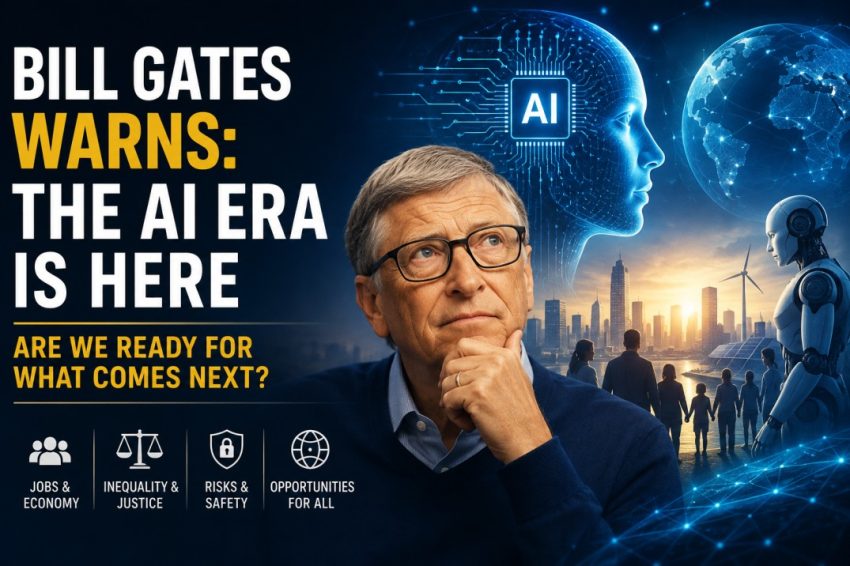
According to Bill Gates, the world is “on the verge of a transformation in AI that could define one of the most tumultuous eras in modern history”. Since AI has now reached a stage where it can execute progressively sophisticated mental tasks, this can cause a tsunami of opportunities and mounting societal, economic, political and security concerns simultaneously. The key is not just a question of future computational might but how the world navigates that power and share its fruits. A primary worry is employment.
AI’s growing ability to undertake jobs in the service sector (customer service, software development, legal work, data analysis) plus healthcare and finance means it will soon do the work of countless white-collar workers. Further, sharp advances in robotics may bring similar disruption to physical occupations like construction or food service. Gates argues this revolution could be a starker and more rapid one than we have seen before.
Vulnerable Sectors
The most vulnerable include entry-level workers and young people. Governments initiation is needed because of these challenges to support a transition with re-training and social insurance, with an everything-for-everyone economic policy. Gates points out the possibility of AI being used to enhance destructive practices. These include use in crime (fraud, misinformation, deep fakes, as well as cyberattacks), including various forms of exploitation, like large scale surveillance.
The technology could also potentially intensify threats from biological attacks and autonomous weaponry. As AI systems advance, the problem society will face are the escalating risk that ever more autonomous systems will behave in unexpected ways. Another worry is the impact of AI on human development.
Meanwhile the over usage of AI for learning might weaken the individual thinking. We need to remember that when disinformation and “deepfake” are getting more and more sophisticated, good critical thinking skill is crucial.
Positive Side
Gates is clear that these benefits could be outstanding. AI could facilitate research, make healthcare more effective, increase agricultural output, enhance education and make government services more like to date.
In developing countries, farmers could, for example, leverage AI to get better advice about weather, crops, animals and soil. Healthcare systems could deploy the application for diagnosis and treatment while teachers could use it to help individual students. Gates this way contends that we need a full system of how to deal with the AI transition.
Conclusion
The government should create institutions that will have the capacity to handle the impacts of AI on employment, education, health care, taxation, defense as well as energy. And, all of the other sectors for which the effects of AI will be intertwined. International cooperation will be crucial as well because many of the risks of AI do not stop at borders. In addition, he argues for the designation of certain areas as being ‘Human Reserved, ‘ that is they should be intrinsically excluded from automation because of economic, ethical or emotional reasons.
He also advocates reconsideration of the taxation system so that the economic forces do not unduly motivate the substitution of workers by machines.
The conclusion of Gates’s argument is that AI is not solely the domain of technology companies. To do that, all sectors like employees, governments, educators, companies, civil society and communities need to be involved in the governance of the technology.
