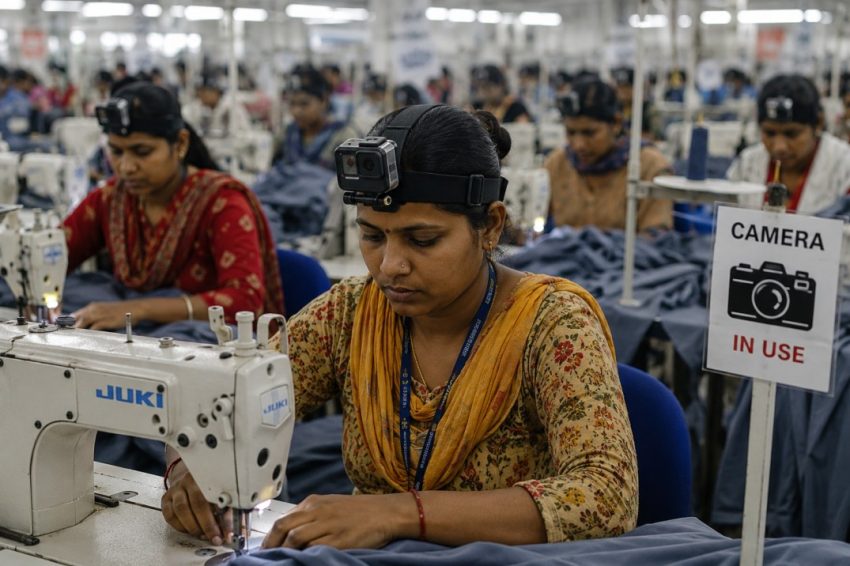
At first, a simple curiosity-driven experiment in the workplace has turned into a frightening dilemma about the employment future in the era of AI. In the future, these robots may end up replacing them without even the people realizing it.
Lalita is a garment worker of 32 years. She is employed at a factory situated in a suburban area of Delhi. The first time she had these experience, it was a source of amusement. The factory supervisors gave the workers tiny cameras attached to their heads and told them to wear the cameras during their shifts. Very little explanation was given to the workers as to what the purpose of the recordings was.
“Initially, it seemed quite funny, ” Lalita recounted. “It was as if our heads had been mounted with CCTV cameras.”
Besides capturing the workers’ time at work, the lenses also photographed the needle threading, material handling, error corrections, and the workers’ interaction with each other. But, after some time, the laughter was replaced by worry. It was gradually dawning on the people that all their moves, talks, and even rest periods were matter for the recordings.
Most did not understand that their behavior was actually becoming extremely valuable ‘egocentric data, ‘ personalized videos used for training highly developed AI computers and humanoid robots. With the robotics firms competing to come up with the most successful production robot, human work scenes have turned out to be a highly desirable source of information.
India has become one of the biggest centers of this booming industry. The tech companies are collaborating with the factories to produce mammoth data sets from garment manufacturing logistics construction, and retail. The raw recorded data is cleaned and annotated and then sold to the AI companies that are developing the new generation of robotic systems.
The experts from the industry maintain that a robot is an organism which needs abundant data of human activities recorded in the real world to be able to perform any physical task. Unlike AI chatbots which get their training from internet text, robots have to be shown by humans how to move, handle objects, and get around in a work environment.
Still, the workers who produce such data are hardly rewarded economically for the same.
Deep probes into the matter reveal that a large number of factory workers may never be receiving even the leftovers of such huge value-generating datasets whose transaction price may later reach millions of dollars. There are cases where the workers claim that the only thing they got during the reframing was a refreshment.
The payments are almost always made to the factory owners instead of to the individual workers. Labor activists think that this is a fertile ground for ethical problems. The agents, besides the compensation issue, usually the workers are in the dark as to how and where the data will be used. In many factories, the willingness to participate may not be genuine.
There might be situations where the employees will sign the contract out of fear of unemployment. The concern for being monitored has also increased due to Truth is the wearable camera devices may, at times, capture sensitive moments, and there are reports about the companies using the videos not only to monitoring the productivity of their staff but also tracking their conversations and identifying “idle” times on the factory floor.
With the increasing capability of the AI systems, it is now the right time to regulate the things like the ownership of the data produced inside the working place and whether the workers can claim a part of the value resulting from these data. There are those who advocate for royalty or other such measures that would place a monetary value on the human contribution over and above the wage paid.
For people like Lalita, the issue is still very personal.
“At the present moment we are not even getting paid our full wages for the work we do, ” she pointed out. “Who will give us money when robots replace us?”
Her query reflects a big problem worldwide: as AI progressively operates by imitating humans, will the people be the ones to enjoy the benefits of this new world?
Source: The Guardian
